Human Health · Planetary Sustainability
Shared Prosperity
GD Green Renovation Certification aligns its 40 indicators with the UN Sustainable Development Goals (SDGs) and the Environmental, Social and Governance pillars — from material selection and site management to on-site testing — so every certified space is verifiable sustainable practice.
How We Contribute to the UN SDGs
Core goals identified from the 17 SDGs and built into all 40 GD certification indicators (full mapping below)
 Good Health and Well-being
Strict indoor testing for formaldehyde, TVOC and PM2.5 lowers the risk of respiratory disease.
 Quality Education
Professional Green Designer training and exams — 2,274 green designers trained, with ongoing public lectures on healthy renovation.
 Clean Water and Sanitation
Water-saving fixtures on site, plus whole-home drinking-water filtration and quality testing.
 Affordable and Clean Energy
Lighting power density capped at 8W/m² with Tier-1 energy-efficient appliances.
 Sustainable Cities and Communities
Over 43,713 ping (≈144,515 m²) of indoor space applied for GD certification of indoor space with universal, all-ages design.
 Responsible Consumption and Production
At least 65% healthy green materials and low-emission adhesives, with no over-renovation.
All 40 GD Indicators Mapped to ESG and the SDGs
Every GD-certified project — from planning and materials to construction and final testing — delivers concrete results for your ESG report

Most frequently addressed SDG targets
Indicators by stage
Qualified Green Designer
At least one certified Green Designer — trained, tested and holding a valid certificate (12 credits per cycle to renew) — must be on every GD project.
Paperless Submission
Since 2022, GD applications moved from paper to online submission, speeding up review and cutting paper waste.
Renovation Trust
A third-party renovation trust is recommended to protect both parties’ payments; opting out requires both signatures.
Carbon Inventory
Starting with equipment power use during renovation, project emissions are converted to CO2e — building a measurable baseline for full carbon accounting.
Effective Ventilation Path
People spend about 90% of their time indoors. Every space needs a ventilation path to exhaust pollutants — created mechanically where natural airflow is missing.
Indoor Ventilation System
Where windows cannot be opened, energy-recovery or fresh-air units filter outdoor air, bring it in and exhaust harmful gases.
IAQ Monitoring System
Real-time indoor air quality data lets occupants act immediately and stay in a healthy environment.
Construction Schedule
A Gantt chart of every work item keeps the renovation timeline clear for GD review scheduling and tracking.
Complete Design Drawings
Full plans and elevations recording layout, floor area and orientation.
Maintenance Access Openings
Ceilings and shafts include removable access openings for future repair and replacement.
Piping & Wiring Layout
Complete routing drawings for all floor and wall runs make future maintenance straightforward.
Ceiling Lighting Inspection
Lighting circuit drawings are checked for overload, then verified on site by GD reviewers.
Lighting Power Density (LPD)
Lighting energy is controlled and assessed through LPD (W/m²) to verify energy savings.
Energy-Efficient Appliances
Gold requires at least one, Platinum at least two, Grade-1 energy-efficiency appliances.
Water-Saving Fixtures
Fixtures with the Water Conservation Label reduce household water use.
Drinking Water Filtration
Pitcher, faucet, countertop or under-sink filters remove invisible contaminants for safe drinking water.
Shower Water Filtration
Heated chlorinated water forms carcinogenic trihalomethanes; NSF 177-certified shower filters are required.
Five Universal Design Items
Universal (all-age) design lets people of every age use the space safely and comfortably.
Green-Label or Water-Based Paint
Green-labelled or water-based coatings cut the TVOC pollution caused by solvent-based paints.
Low-Emission Adhesives & Sealants
Low-emission or water-based adhesives and sealants reduce workers’ cancer risk during renovation.
Low-Emission Substrates & Finishes
Material choices guided by the renovation load-ratio calculation keep the finished space within healthy IAQ limits.
No Asbestos, Lead or Mercury
Materials long used in construction but seriously harmful to health — restricted or banned worldwide.
Green Building Material Ratio
Taiwan requires at least 60% green-labelled materials in interior work; Taipei raised this to 75% in 2024.
Humidity-Regulating Materials
In Taiwan’s hot, humid climate, humidity-regulating materials help keep indoor moisture stable.
Sound-Absorbing / Insulating Materials
Reducing long-term noise exposure eases stress, anxiety and insomnia and helps concentration.
Recycled Green Materials
Taiwan generates about 11 million tonnes of demolition waste a year; recycled materials reduce virgin resource extraction.
Tidy Worksite
A tidy site reflects professionalism, prevents accidents and earns clients’ trust.
Secondary Pollution Control
Dust collection, masks and ventilation protect workers and neighbours from dust and harmful emissions.
No Smoking, Alcohol or Betel Nut
Clear site rules prevent accidents and protect workers’ long-term health.
Electrical Safety
Breakers are labelled by circuit; live, earth and neutral wiring is checked and panels are leak-free.
Emergency Preparedness
Fire extinguishers and a first-aid kit are kept on site for emergencies.
Site Signage
A standard sign pack reminds everyone on site of the rules: no smoking, clear walkways, masks, ventilation and daily clean-up.
Random Material Sampling
On-site samples are checked against the submitted list so mixed grades never compromise final air quality.
Legal Recycling of Demolition Waste
Old-home renovation is about 97% of the market; waste must be legally recycled to protect the environment and the brand.
Prefabricated Methods & Products
Prefabrication reduces on-site work, dust and VOC residue. Gold requires at least one, Platinum at least two.
Stage-by-Stage Records Review
All records from planning to site management are reviewed as the basis for completion acceptance.
Indoor Air Quality Test
Post-renovation testing confirms pollutants are within limits for safe occupancy.
Drinking Water Quality Test
Water testing makes sure every glass of water is safe to drink.
Indoor Lighting Environment Test
Illuminance, colour rendering, flicker and circadian rhythm are assessed for comfort and health.
One-Year Follow-Up Test
Occupants may request one follow-up IAQ test a year after completion.
Source: GGCb, “GD Green Renovation Indicators and ESG / SDGs Mapping”, April 2026
In Action · What We Actually Do
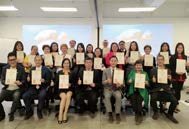
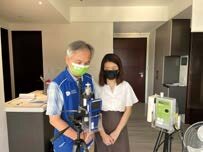
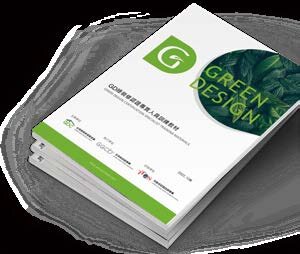
Certification courses, sustainability camps, air-quality testing and the Green Handbook — GD certification on the ground